

Course description: This course will familiarize students with the basic knowledge of geographic information systems (GIS) and their application to social work practice and research. The course is organized around three primary areas: 1) conceptual; 2) technical; and 3) data management. A conceptual overview of GIS is presented to provide students with foundational knowledge about the theory, purpose, function, and applicability of GIS in practice and research settings. Students will develop critical thinking skills necessary to devise research questions appropriate for a GIS, to develop a GIS, interpret the findings, and to evaluate the spatial relationships between variables.

























-
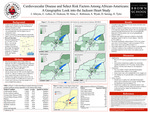
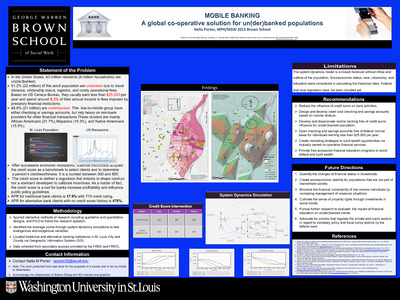
Cardiovascular Disease and Select Risk Factors Among African Americans: A Geographic Look into the Jackson Heart Study
J. Alleyne, C. LaSee, D. Hickson, and M. Sims
12-12-2014Cardiovascular diseases (CVD) continue to be the leading cause of death in the US, accounting for 34.4% of all deaths in 2003. Morbidity and mortality rates associated with CVD vary geographically, with the highest rates in southeastern states. African-Americans in Mississippi have historically higher rates of CVD than any racial or ethnic group. This poster is presents local spatial patterns of CVD and CVD risk factors exist among African-Americans residing in the Jackson, Mississippi Metropolitan Statistical Area (MSA), composed of Madison, Hinds, and Rankin counties?
-
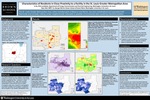
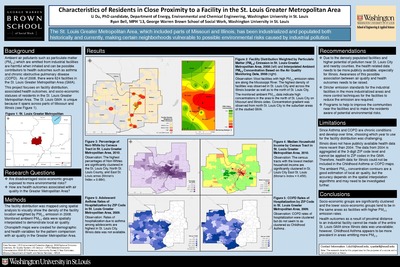
Characteristics of Residents in Close Proximity to a Facility in the St. Louis Greater Metropolitan Area
Li Du and Ryan Bell
12-12-2014Ambient air pollutants such as particulate matter (PM2.5) which are emitted from industrial facilities are harmful when inhaled and can be possible contributors to health outcomes such as asthma and chronic obstructive pulmonary disease (COPD). As of 2008, there were 624 facilities in the St. Louis Greater Metropolitan Area (GMA). This project focuses on facility distribution, associated health outcomes, and socio-economic statuses of residents in the St. Louis Greater Metropolitan Area. The St. Louis GMA is unique because it spans across parts of Missouri and Illinois.
-
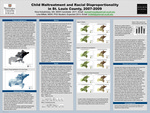
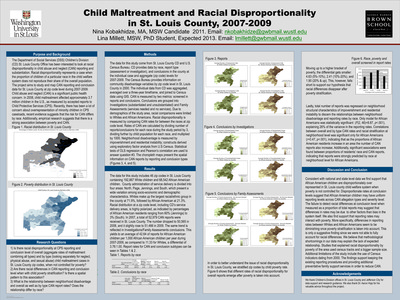
Child Maltreatment and Racial Disproportionality in St. Louis County, 2007-2009
Nina Kobakhidze and Lina Millett
12-12-2014The Department of Social Services (DSS) Children’s Division (CD) St. Louis County Office has been interested to look at racial disproportionality in child abuse and neglect (CAN) reporting and substantiation. Racial disproportionality represents a case when the proportion of children of a particular race in the child welfare system does not reproduce their share of the overall population. The project aims to study and map CAN reporting and conclusion data for St. Louis County at zip code level during 2007-2009.
-
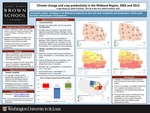
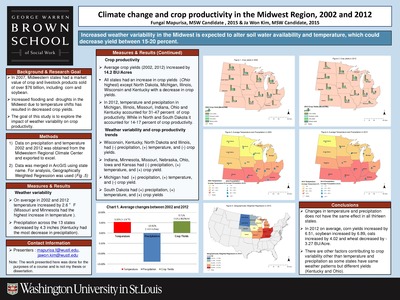
Climate change and crop productivity in the Midwest Region, 2002 and 2012
Fungai Mapurisa and Ja Won Kim
12-12-2014Increased weather variability in the Midwest is expected to alter soil water availability and temperature, which could decrease yield between 15-20 percent. The goal of this study is to explore the impact of weather variability on crop productivity.
-
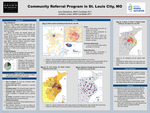
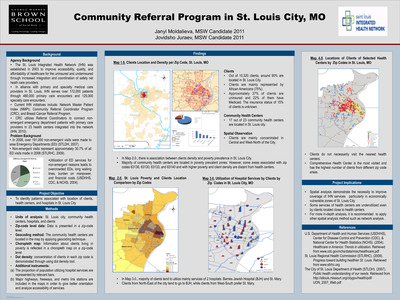
Community Referral Program in St. Louis City, MO
Janyl Moldalieva and Jovidsho Juraev
12-12-2014The St. Louis Integrated Health Network (IHN) was established in 2003 to improve accessibility, quality, and affordability of healthcare for the uninsured and underinsured through increased integration and coordination of safety net heath care providers. In alliance with primary and specialty medical care providers in St. Louis, IHN serves over 172,000 patients through 480,000 primary care encounters and 125,000 specialty care encounters. Current IHN initiatives include: Network Master Patient Index (NMPI), Community Referral Coordinator Program (CRC), and Breast Cancer Referral Program. CRC utilizes Referral Coordinators to connect non-emergent emergency department patients with primary care providers in 23 health centers integrated into the network (IHN, 2010).
-
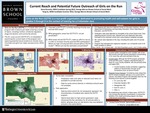
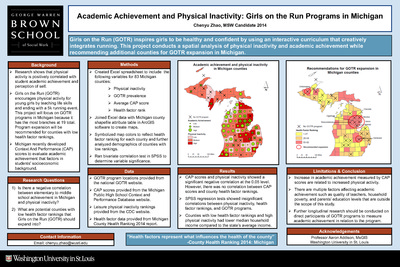
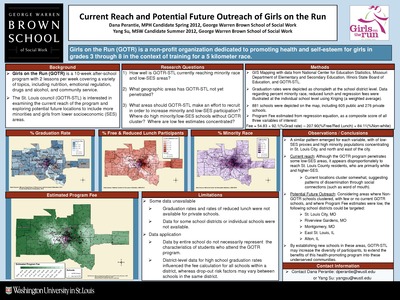
Current Reach and Potential Future Outreach of Girls on the Run
Dana Perantie and Yang Su
12-12-2014Girls on the Run (GOTR) is a non-profit organization dedicated to promoting health and self-esteem for girls in grades 3 through 8 in the context of training for a 5 kilometer race. This poster demonstrate using GIS to ask how well is GOTR-STL currently reaching minority race and low-SES areas; what geographic areas has GOTR-STL not yet penetrated; what areas should GOTR-STL make an effort to recruit in order to increase minority and low-SES participation? Where do high minority/low-SES schools without GOTR?
-
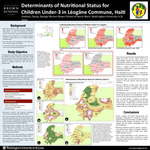
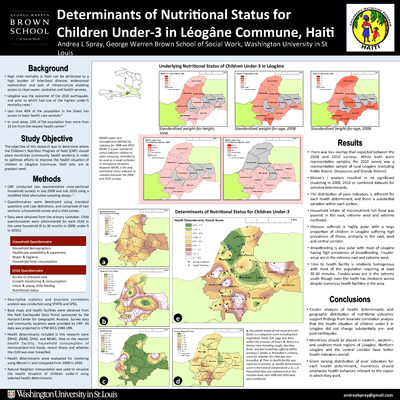
Determinants of Nutritional Status for Children Under-3 in Léogâne Commune, Haiti
Andrea L. Spray
12-12-2014High child mortality in Haiti can be attributed to a high burden of infectious disease, widespread malnutrition and lack of infrastructure enabling access to clean water, sanitation and health services. Léogâne was the epicenter of the 2010 earthquake, and prior to which had one of the highest under-5 mortality rates. Less than 40% of the population in the Ouest has access to basic health care services In rural areas, 13% of the population lives more than 15 km from the nearest health center. The objective of this research was to determine where the Children’s Nutrition Program of Haiti (CNP) should place monitrices (community health workers) in order to optimize efforts to improve the health situation of children in Léogâne Commune, Haiti who are at greatest need.
-
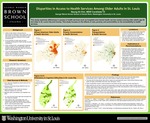
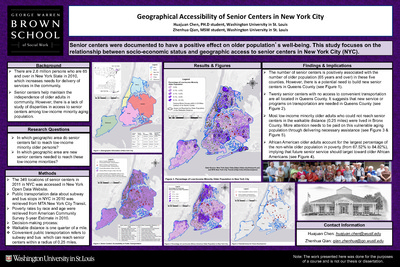
Disparities in Access to Health Services Among Older Adults in St. Louis
Seung Ah Kim
5-4-2014This project asks: are there racial disparities in access to health services among older adults in St. Louis City and County? Are there differences in access to health services among older adults depending on their poverty status in St. Louis City and County? Is the public transportation system well-connected between areas with low automobility and health services in St. Louis City and County?
-
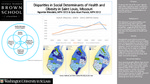
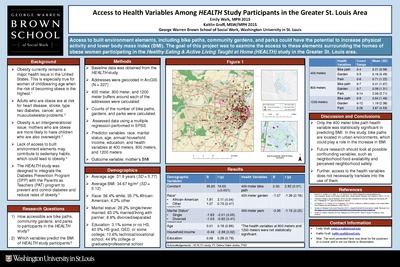
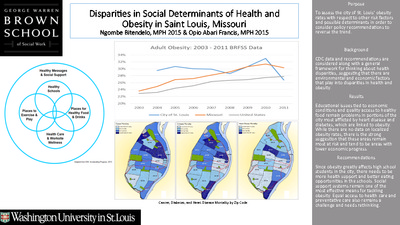
Disparities in Social Determinants of Health and Obesity in Saint Louis, Missouri
Ngombe Bitendelo and Opio Abari Francis
6-30-2014This project aims to assess the city of St. Louis's obesity rates with respect to other risk factors and possible determinants in order to consider policy recommendations to reverse the trend.
-
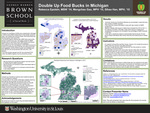
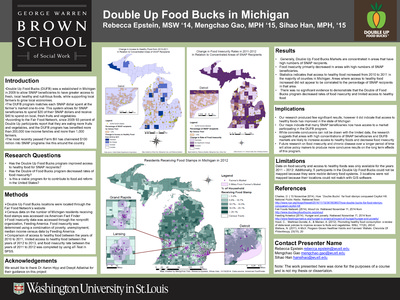
Double Up Food Bucks in Michigan
Rebecca Epstein, Mengchao Gao, and Sihao Han
12-12-2014Double Up Food Bucks (DUFB) was a established in Michigan in 2009 to allow SNAP beneficiaries to have greater access to fresh, local healthy and nutritious foods, while supporting local farmers to grow local economies. This project asks: has the Double Up Food Bucks program improved access to healthy food for SNAP recipients?nHas the Double of Food Bucks program decreased rates of food insecurity? Is this a viable program for to contribute to food aid reform in the United States?
-
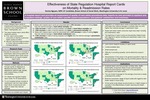
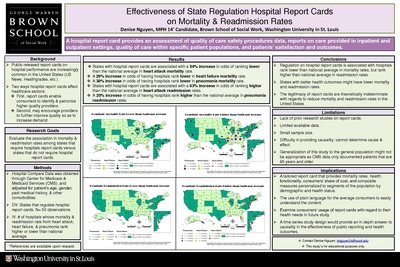
Effectiveness of State Regulation Hospital Report Cards on Mortality & Readmission Rates
Denise Nguyen
5-4-2014This project evaluates the association in mortality and readmission rates among states that require hospitals report cards versus states that do not require hospital report cards.
-
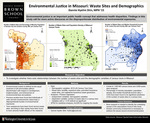
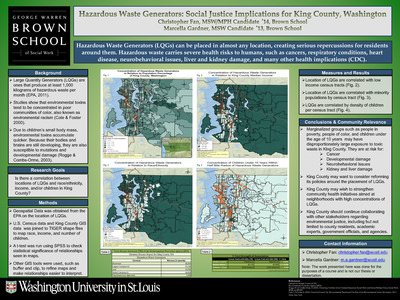
Environmental Justice in Missouri: Waste Sites and Demographics
Dannie Hyelim Shin
12-9-2014Environmental justice is an important public health concept that addresses health disparities. This study aims investigate whether there exist relationships between the number of waste sites and the demographic variables of census tracts in Missouri. Findings in this study call for more active discourse on the disproportionate distribution of environmental exposures.
-
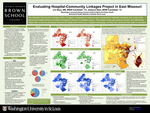
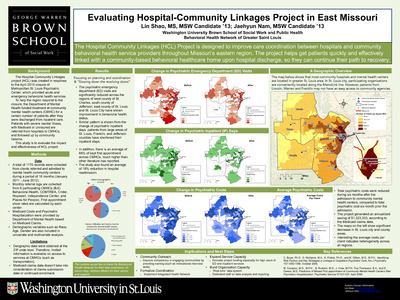
Evaluating Hospital-Community Linkages Project in East Missouri
Lin Shao and Jaehyun Nam
12-12-2014The Hospital Community Linkages (HCL) Project is designed to improve care coordination between hospitals and community behavioral health service providers throughout Missouri’s eastern region. The project helps get patients quickly and effectively linked with a community-based behavioral healthcare home upon hospital discharge, so they can continue their path to recovery.
-
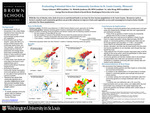
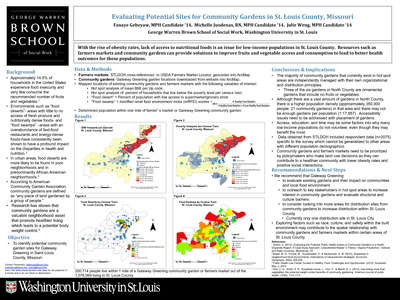
Evaluating Potential Sites for Community Gardens in St. Louis County, Missouri
Fanaye Gebeyaw, Michelle Juodenas, and Julie Weng
5-4-2014This project identifies potential community garden sites for Gateway Greening in Saint Louis County, Missouri.
-
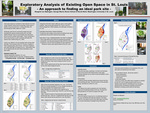
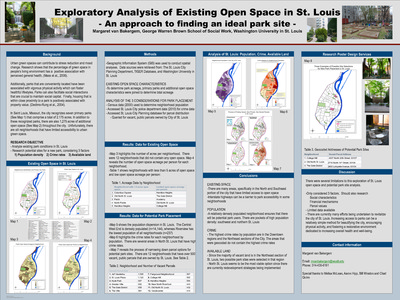
Exploratory Analysis of Existing Open Space in St. Louis - An approach to finding an ideal park site -
Margaret van Bakergem
12-12-2014Urban green spaces can contribute to stress reduction and mood change. Research shows that the percentage of green space in people’s living environment has a positive association with perceived general health, (Mass et al., 2006). Additionally, parks that are conveniently located have been associated with vigorous physical activity which can foster healthful lifestyles. Parks can also facilitate social interactions that are crucial to maintain social capital. Finally, housing that is within close proximity to a park is positively associated with property value. (Dedimo-Rung et al., 2004). In Saint Louis, Missouri, the city recognizes seven primary parks that comprise a total of 2.175 acres. In addition to these recognized parks, there are also 1,275 acres of additional open space throughout the city. Unfortunately, there are sill neighborhoods that have limited accessibility to urban green space. This project analyzes existing park conditions in St. Louis and research potential sites for a new park, considering factors of population density, crime rates and available land.